
Among possible new members, former chief economic advisor Arvind Virmani's name is doing the rounds.

The immediate revenue loss could worsen the Centre's fiscal deficit, from the budgeted 3.3 per cent of gross domestic product (GDP) to 3.7 per cent of GDP -- a massive 40-basis-point increase. It was stabilised at 3.4 per cent since 2016-17, report Abhishek Waghmare and Dilasha Seth.

The fall in investment rate is not surprising. But putting it together with rising share of wages in GVA, it shows that the focus is more on productivity, rather than adding new capacity, says Pronab Sen, former chief statistician of India.

Over the years, start-ups are struggling more to garner funds as they pass the elementary stages of growth.
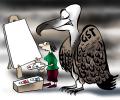
Experts said if the slowdown, and subsequent weakness in GST mobilisation, continued, it would curtail the Centre's resources to a considerable extent in the current financial year.

NITI Aayog had been asking for Rs 7,500 crore for three years to set up an AI framework.

For his first Budget in July 2014, Jaitley inherited a fiscal deficit target of 4.1 per cent of GDP. From 4.1 per cent, the fiscal deficit came down to 3.4 per cent by 2018-19, with two slippages from the budgeted targets, in 2017-18 and 2018-19, the former due to introduction of the GST, says Arup Roychoudhury.

The dichotomy between richer and poorer states is largely in consonance with the diversity in state level disease burden in the country.

Sources in the Fifteenth Finance Commission said that they will implement the provisions after the bill is enacted and the President makes a reference to it.

As the government plans to take sector-specific steps to tackle the slump, Finance minister Nirmala Sitharaman will soon hold talks with representatives from various sectors to get and take steps so that the confidence of those sectors can be restored.

Credit to priority sectors as well as small and medium industries will be discussed to find ways to accelerate economic growth.

An official said that people in the government were aware of the benefits as well as the drawbacks of issuing overseas sovereign bonds, and there will be consultations with all stakeholders.

Maharashtra and Delhi lead the pack of states in terms of absolute number, with 142,425 and 125,937 closed companies, respectively.

With less than five months left for the report of the Fifteenth Finance Commission to be submitted, its chairman N K Singh said the report will have fiscal road map for states, depending on their current situation.

Revenue foregone on account of corporation tax exemptions is estimated to grow by 16 per cent in 2018-19 (FY19) versus 8.7 per cent in the previous year and 12 per cent in 2016-17, show the Budget documents.
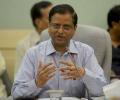
Owing to Finance Minister Nirmala Sitharaman being new to her role, a number of crucial announcements in the Budget bore Garg's imprint, especially the decision to borrow in overseas markets, reduce the fiscal deficit as a percentage of gross domestic product, and resort to off-Budget borrowing to meet that target, says Arup Roychoudury.

A government panel said policymakers and regulators should have an open mind regarding the introduction of an official digital currency in India.

The bonds will likely be simultaneously launched in major financial centres such as London, Singapore, Hong Kong, New York for a term of no less than 20 years.
Nirmala Sitharaman has designed the revenue mix in such a way that while Centre's share in taxes would grow a massive 25 per cent, states' share would grow a dismal 6 per cent.

The railways heritage lines that are part of the UNESCO-accorded sites list include Darjeeling Himalayan Railway, Nilgiri Mountain Railway, and Kalka Shimla Railway.
 © 2026 Rediff.com - Investor Information - Advertise with us - Disclaimer - Privacy Policy - Sitemap - Feedback - About us - Terms of use - Grievances